Machine Learning for Predictive Maintenance in Slurry Pumps
Enhance slurry pump reliability with Machine Learning. Discover how PCA, classification tools, and predictive maintenance improve asset performance.
Predictive Maintenance Workflow

Principal Component Analysis (PCA)
PCA aids in dimensionality reduction by extracting the most significant features from the sensor and simulation data. This technique enhances the model’s efficiency by focusing on the principal components that contribute the most to the variability in the dataset, allowing for a streamlined and effective representation of the pump’s operational behaviour within the overall Asset Performance Strategy.
This article delves into the technical implications of PCA, exploring its applications in feature reduction and subsequent utilisation in conjunction with classification tools. Tools like scikit-learn (sklearn) and seaborn are spotlighted for their pivotal roles in implementing these techniques.
Consider a scenario where sensor data, including acceleration, temperature, torque, speed, pressure, and feed rate, is collected. PCA allows us to transform this high-dimensional data into a lower-dimensional space, retaining the essential features and highlighting the dominant patterns.
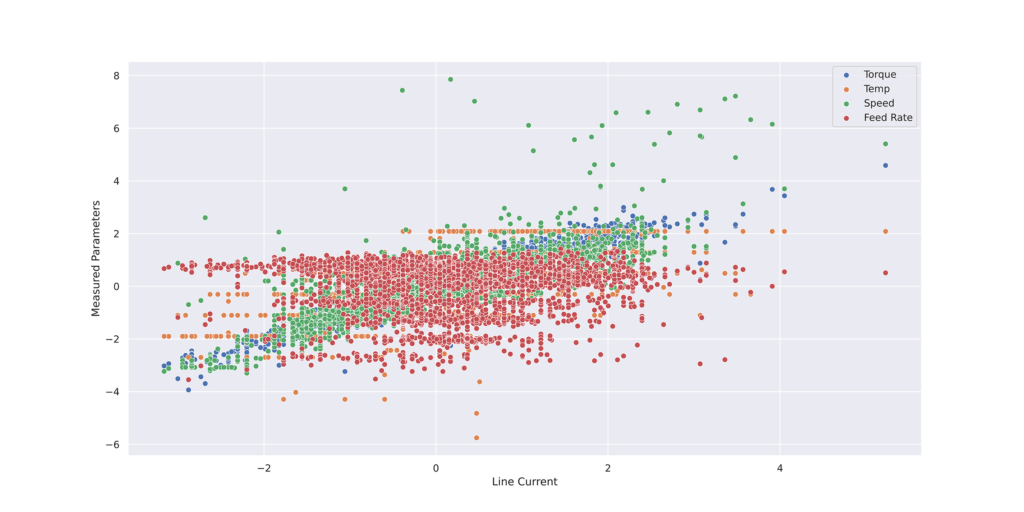
Figure 1 show an example of our dataset, 8 variables collected over time. It would be impossible to analyze all these variables independently and expect an efficient and accurate result.

Classification Tools
Classification tools play a pivotal role in predictive maintenance by categorizing data into distinct classes or conditions. Employing algorithms such as Support Vector Machines (SVM) or Random Forests facilitates the creation of robust models for predicting equipment conditions based on the reduced feature set obtained from PCA, ultimately enhancing Asset Performance.
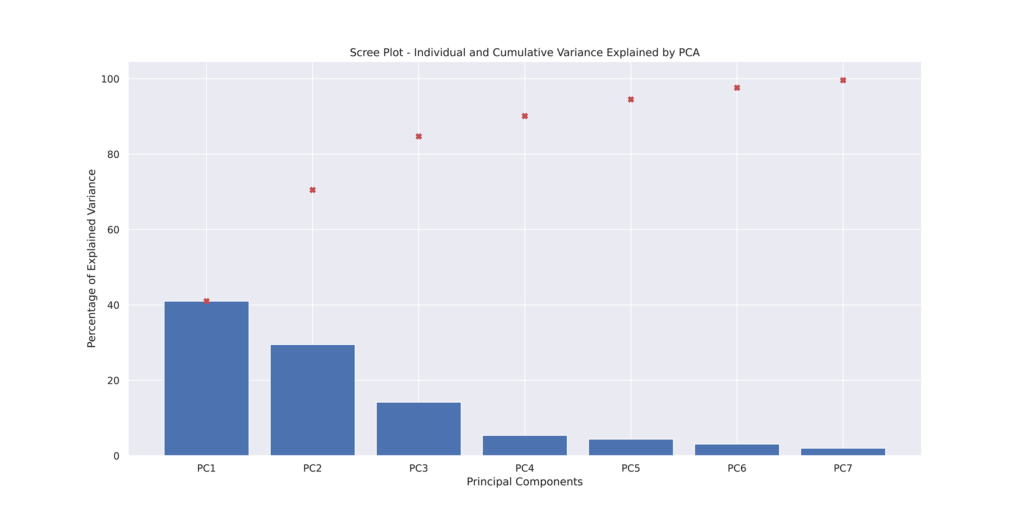
The Scree Plot shown in Figure 3, presents the results of the principal component analysis.
Data Visualization with Seaborn
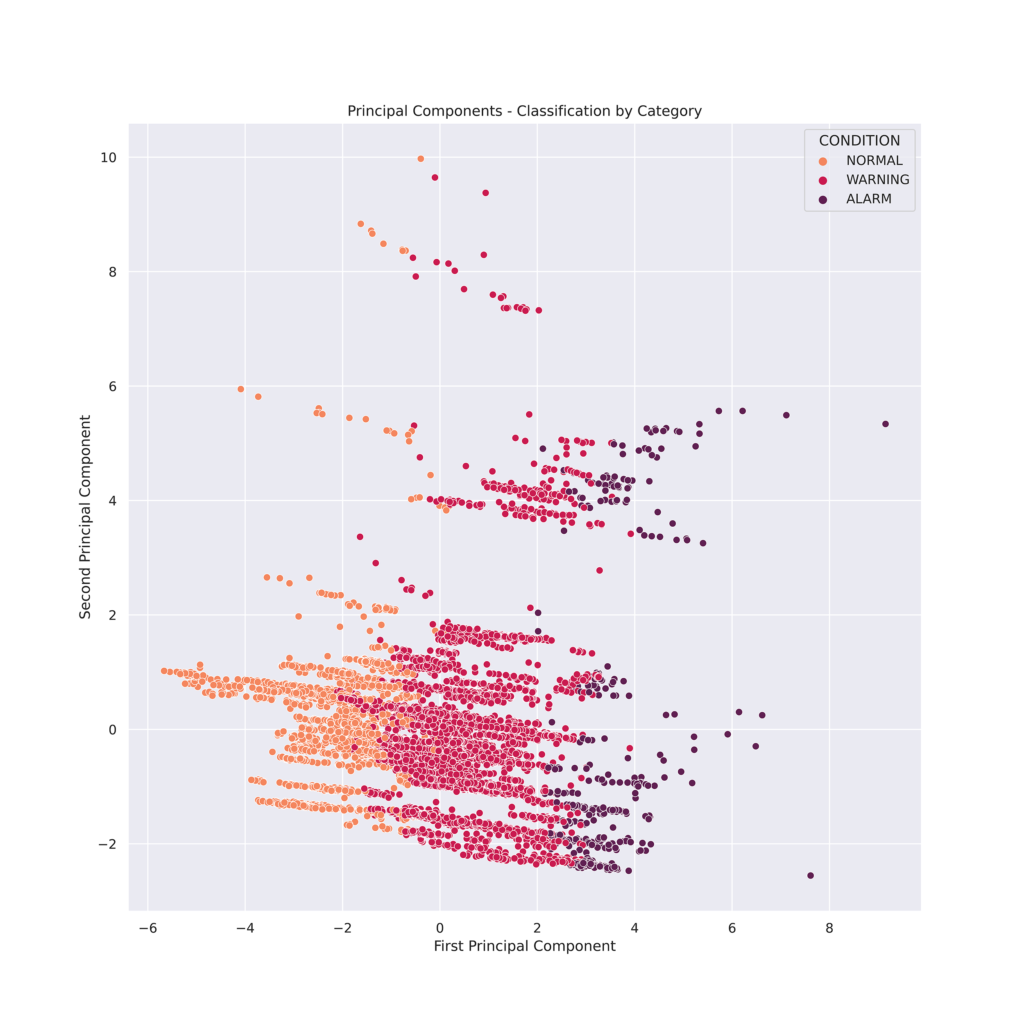
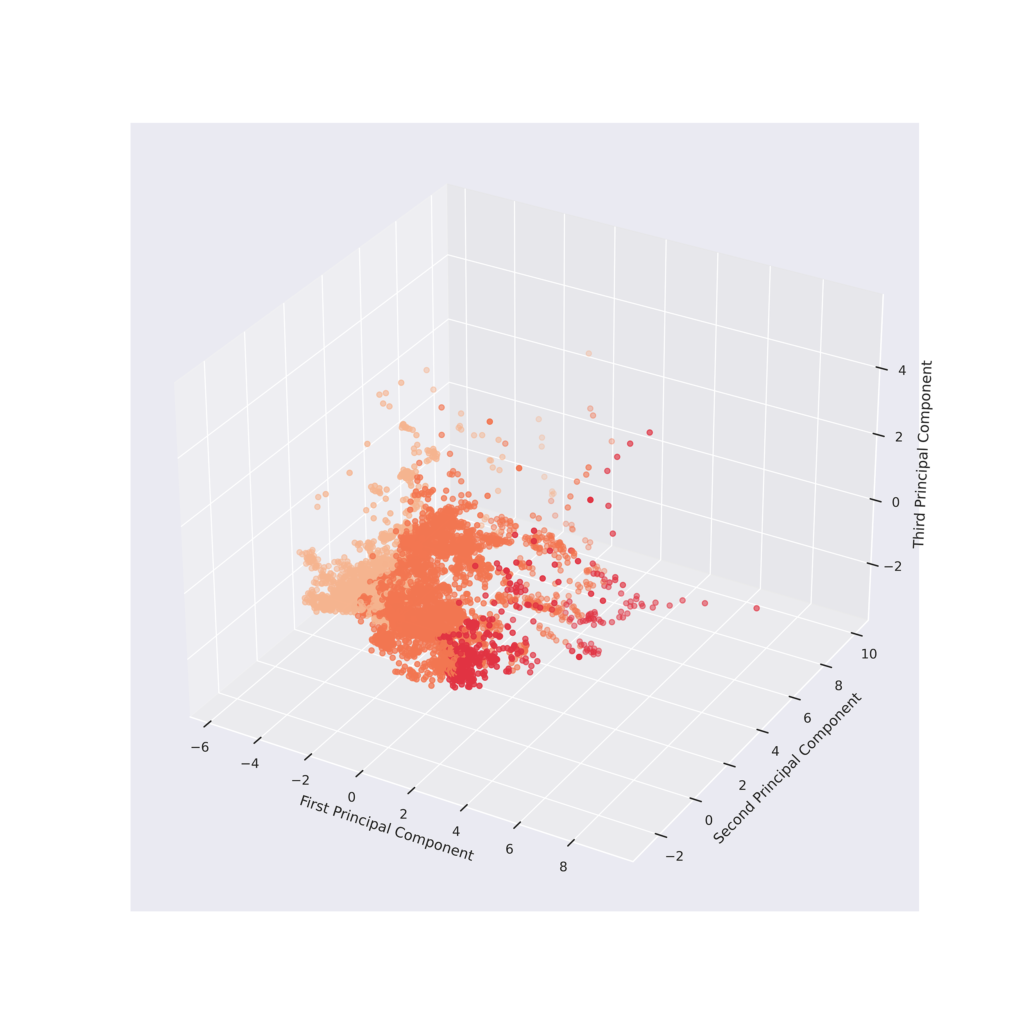
Seaborn, a statistical data visualization library built on top of Matplotlib, enhances the interpretability of results. Scatter plots with seaborn can be instrumental in visually discerning patterns or clusters within the reduced feature space, aiding in both exploratory analysis and model validation.
In this example, the scatter plot using grouping displays the two quantitative variables (PC1 and PC2) and one categorical variables (discreet labels) for Conditions: “NORMAL”, “WARNING” and “ALARM”, facilitating the understanding of how this pump degrades over time.
Conclusion
The integration of Machine Learning techniques, particularly PCA, into the Predictive Maintenance workflow for slurry pumps in the mining industry enhances the ability to monitor and predict equipment conditions. By leveraging these advanced methodologies, mining operations can achieve proactive maintenance strategies, minimize downtime, and optimise the asset performance strategy of critical slurry pump systems, contributing to increased operational efficiency and reduced maintenance costs.
Keywords: Machine Learning, Asset Performance Strategy, Predictive Maintenance, Principal Component Analysis, Feature Extraction, Supervised Learning, Condition Monitoring, Predictive Modelling, Python Programming, Scikit-learn, Seaborn